


Several Types of Fiber Filament Winding Processes
Dec 17,2025
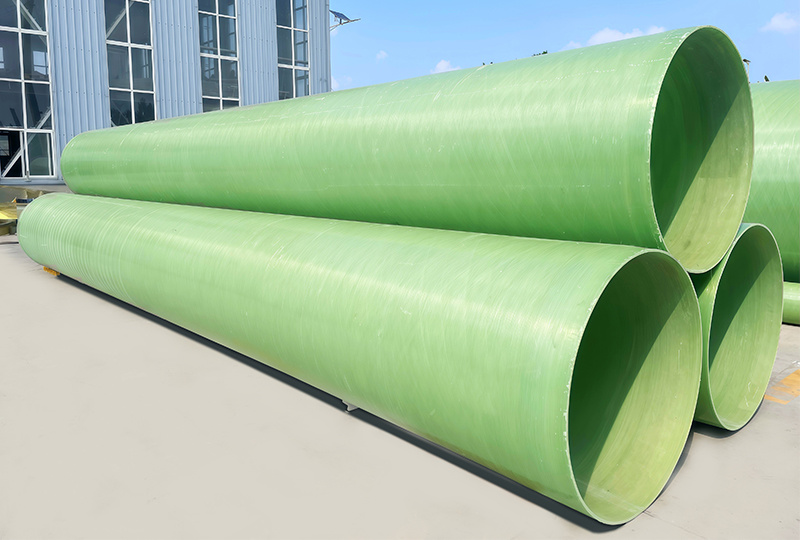
Fiber filament winding processes can be classified into the following three main types based on their specific operational methods:
Dry Filament Winding
In this method, continuous glass fiber rovings are first impregnated with resin, then subjected to appropriate heating and baking to remove solvents, advancing the resin's gelation from the initial A-stage to the B-stage. Subsequently, they are wound onto spools for storage. During actual winding, these pre-processed prepreg tapes are directly laid onto the core mold according to the design pattern.
The prominent advantages of dry winding include easy process control, a cleaner on-site environment, and more favorable working conditions for operators. Products obtained by this method are typically of consistent quality, with significantly increased winding speeds—potentially reaching 100 to 200 meters per minute—making mechanization and automation relatively straightforward.
However, this method has specific material requirements: the curing agents used must remain stable during the drying process of the tape, without volatilization or sublimation. Particularly when using resin systems that require high-temperature curing, such as those containing anhydrides or DDS (diaminodiphenyl sulfone), issues like resin deficiency in the inner layers and excess resin on the outer surface can easily occur. The surface may also exhibit noticeable bubbles and appear uneven. Furthermore, the entire preparation process—from pre-impregnation and drying to spooling—requires specialized equipment, resulting in a relatively complex system and higher investment costs. Consequently, dry winding is primarily used in fields with stringent performance requirements, such as aerospace and military industries.
Wet Filament Winding
Wet filament winding is more straightforward: continuous glass fiber rovings or tapes are directly impregnated with liquid resin and then wound onto the core mold or liner while still wet, followed by curing. Its advantages lie in simpler equipment composition and fewer restrictions on raw materials, offering a wider selection range.
The challenges, however, include the difficulty of promptly inspecting and controlling the quality of the tape immediately after impregnation. Solvents present in the resin can easily form bubbles during curing, and precisely controlling the tension of each fiber during winding is quite challenging. The entire winding line—whether it's the impregnation roller, tension controller, or guide head—requires frequent maintenance and cleaning to ensure stable operation. If fiber entanglement occurs at any point, it can hinder the entire production process, potentially leading to product scrap and waste.
Semi-Dry Filament Winding
The semi-dry process can be seen as a compromise between the previous two methods: it incorporates an additional drying step compared to wet winding, but compared to dry winding, the drying time is shorter, the yarn's dryness is reduced, and the winding operation can be performed at room temperature.
This compromise offers several benefits: it removes solvents, increases production speed, simplifies equipment, and simultaneously improves product quality, significantly reducing the likelihood of defects such as bubbles and voids in the finished product.
In Summary:
The choice of a specific winding process often depends on the actual production conditions and the performance requirements for the final product. Table 1.7 clearly compares the respective characteristics of these three methods.
Table 1.7 Comparison of Different Filament Winding Process Characteristics
Comparison Item | Dry Filament Winding | Wet Filament Winding | Semi-Dry Filament Winding |
Workspace Cleanliness | Optimal | Least Ideal | Comparable to Dry Winding |
Requirements for Reinforcement Material Specifications | Relatively strict; not all specifications are applicable | Any specification is acceptable | Any specification is acceptable |
Potential Issues with Carbon Fiber | No significant issues | Carbon fiber is prone to fraying, which may cause equipment malfunctions | No significant issues |
Resin Content Control | Best control | Most difficult to control | Acceptable control, but resin viscosity may have minor fluctuations |
Material Storage Conditions | Requires refrigeration and record-keeping of storage history | No special storage requirements | Similar to Dry Winding, but shorter storage shelf life |
Fiber Damage | Higher risk (primarily depends on pre-impregnation equipment) | Lowest probability of fiber damage | Relatively low probability of fiber damage |
Product Quality Stability | Offers advantages in certain specific properties | Requires strict whole-process quality control | Quality stability is close to Dry Winding |
Production Cost | Highest | Lowest | Slightly higher than Wet Winding |
Support for Room-Temperature Curing | Not supported | Supported | Supported |
Primary Application Fields | Aerospace and other high-performance fields | Wide range of applications | Application fields similar to Dry Winding |
Previous
Next
Previous:
Next:
Related Articles
Several Types of Fiber Filament Winding Processes
Related Products
Content updating……
Product Category
Contact Us
Phone: +86-131-1602-7188
Email: song@frpyn.com
Address: No. 68, Yongtai Road, Jizhou District, Hengshui City, Hebei Province
Online Message
If you are interested in our products and services, please contact us